The Setsubun Festival at Mibu-dera Temple and Its Festive Atmosphere
Posted date:2026-02-04Author:Tsubakuro
Transrator:Ponta
Category:Kyoto tourist spot , Talk about Kyoto
広告
adsense4
To begin with:
Less than a 10-minute walk from my house is Mibu-dera Temple, famous for its Setubun festival in Kyoto, rivaling Yoshida Shrine in Sakyo Ward.
Although I live very close by, I hadn’t visited there much in the past few years due to the pandemic and other factors. This year, however, I finally took a stroll around the neighborhood with a friend.
The bustling atmosphere of the Bojo-dori area.
Mibu-dera Temple, famous for its Setubun festival and Kyogen performances, is located in Nakagyo Ward, Bojo-dori, south of Shijo, in Kyoto’s unique place names.
Shijo Street is one of the main streets in Kyoto, but Bojo-dori, which intersects with Shijo Street, is an extremely narrow and cramped road.
“I wonder how crowded it will be this year?”
“It’s still daytime, so it probably won’t be so packed you can’t walk, right?”
As we were talking like that, we approached the Shijo-Bojo intersection,
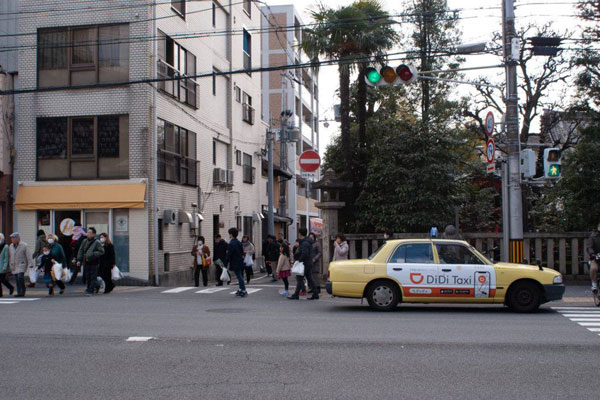
Shijo Bojo intersection
The area is quiet, and at first glance, it doesn’t seem much different from usual.
There didn’t seem to be many people out.
Turning left on Bojo Street and continuing south, I noticed a few food stalls lined up along the street.
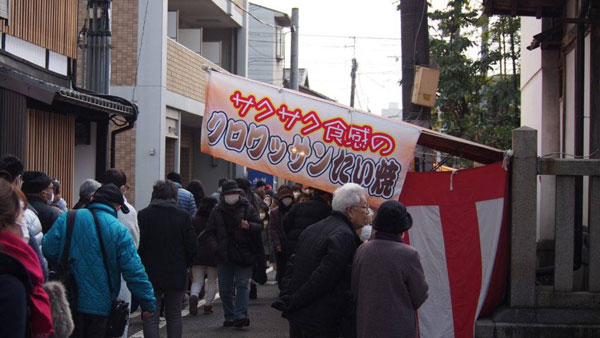
Food stalls along the Bojo Street.
“Ah, there are food stalls here too. But it wasn’t like this before COVID. It was much more crowded. Both sides of the street were packed with food stalls, so much so that you couldn’t even stand.”
“Besides, there aren’t that many people out. Maybe, it’s because it’s noon?”
Previously, Bojo Street was so crowded that we had no choice but to jostle and shove our way through, but now it’s completely different and deserted.
It’s hard to say it’s lively.
I wonder it it’s no longer profitable to set up a food stall these days?
I feel a little sad how much things have changed in the last seven years.
Setubun Festival at Mibu-dera Temple
I walked briskly down Bojo Street and arrived at Mibu-dera Temple in less than three minutes.
There was a signpost just before entering the temple grounds.
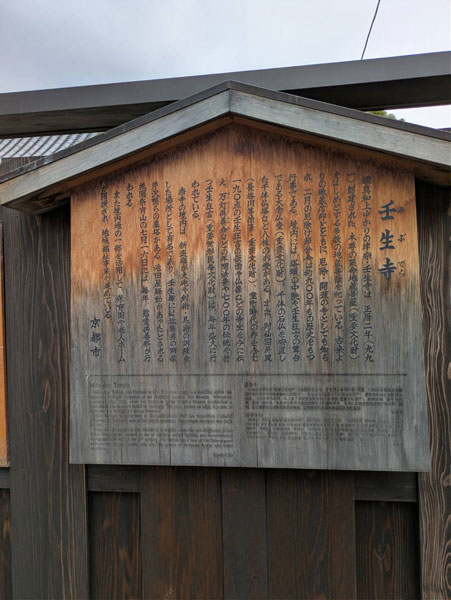
The signpost at Mibu-dera Temple
There are several food stalls set up along the approach to the shrine, making this area quite lively.
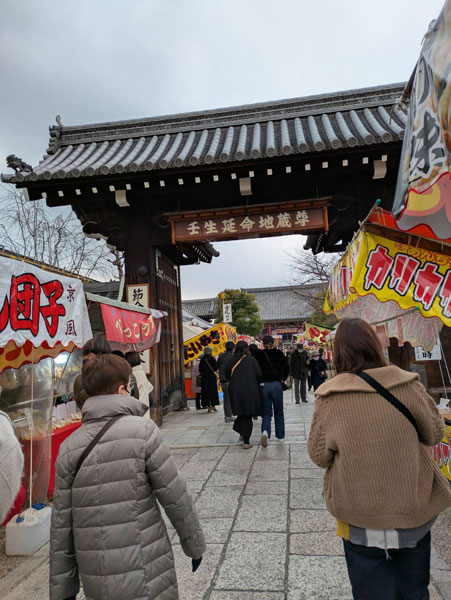
The approach to Mibu-dera Temple
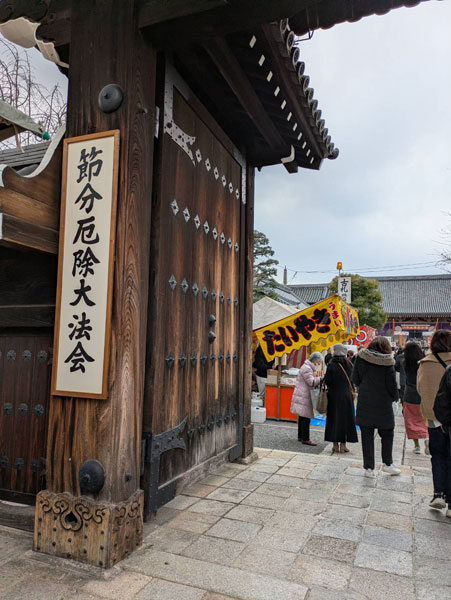
The Setubun Exorcism Ceremony located to the left of the temple gate.
Once you pass through the temple gate, the food stalls disappear, but what immediately catches your eye is the sheet number of tents selling exorcism pots (horaku).
A “horaku” is a type of unglazed brown earthenware plate, and at Mibu-dera Temple, many visitors buy one (700 yen each) and write the names, ages, genders, and wishes of their family and friends on it with ink before offering it as a dedication. This is a unique and unusual Setubun custom.
The more than 1,000 earthenware plates that have been donated are thrown from the stage all at once and shattered into a million pieces during “Horakuwari,” the opening act of the Mibu Kyogen, which can be considered the main event of the night of Setubun.
At Mibu Temple, there is an old tradition that says if you have the earthenware pot you have offered broken, your bad luck for the year will be dispelled and you will be blessed with good fortune.
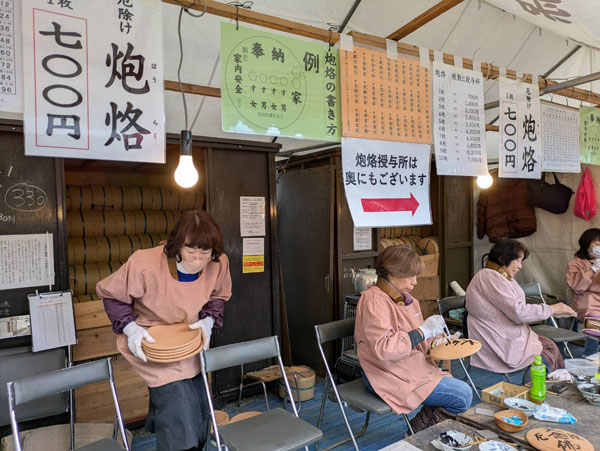
People seeking to buy horaku
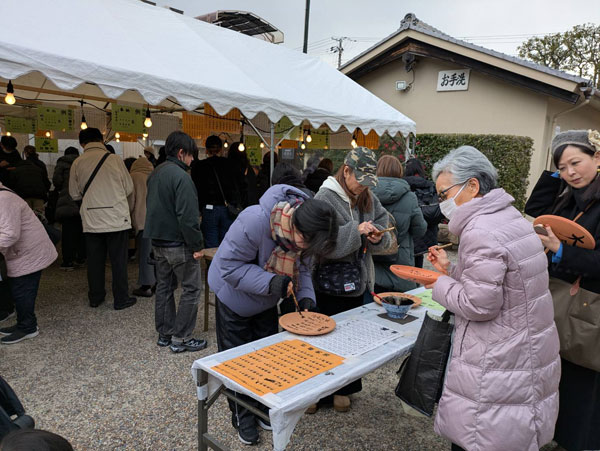
People writing their wishes on horaku they purchased
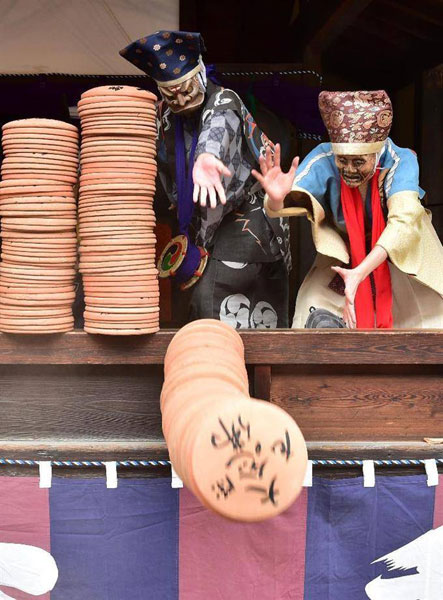
A breathtaking scene from the Mibu Kyogen play “Horakuwari”
Mibu Kyogen refers to the Mibu Dai Nenbutu Kyogen (a type of silent drama) that has been performed since the Kamakrua period.
It has been passed down by people in around Mibu over the 1,300 years.
It is held daily from 5 P.M. to 9 P.M. during the Setubun period (February 2nd to February 4th), from April 29th to May 5th, and for three days around Sports Day in October.
There are said to be 30 different Kyogen plays in total, but the most popular is undoubtedly the spectacular “Horakuwari” (splitting a ceramic plate).
Admission to Mibu Kyogen is free, but it gets extremely crowded every year.
I and my friend did not buy any earthenware pots, but instead enjoyed watching the lively atmosphere on the temple grounds before leaving.
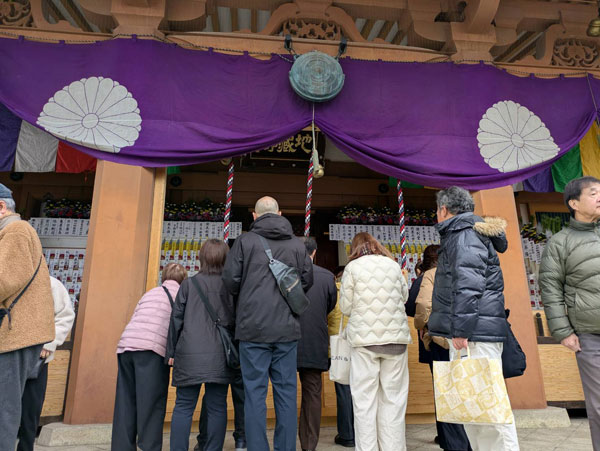
People who clasped their hands together in prayer at the main hall after offering the earthenware pots.
When leaving, my friend bought a bag of beans (400 yen) as a memento of the day.
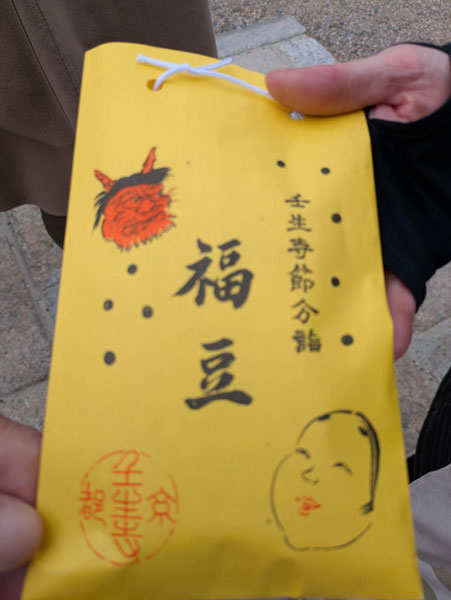
A bag of Setubun beans sold at Mibu-dera Temple
At Turuya Kakujuan, a Japanese confectionery shop associated with the Shinsengumim, located along the temple approach (along Bojo Street)
The place name Mibu is also known for Setubun (the bean-throwing festival), but perhaps what made the name Mibu even more widely known than Setubun is its deep connection with the Shinsengumi.
The Shinsengumi’s headquarters, which continue to fascinate history buffs even today, were located in this very place, Mibu.
The Shinsengumi was a group of the strongest swordsmen of the late Edo period, centered around Kondo Isami, Hijikata Toshizo, and Okita Soji, who were active in Kyoto to protect the authority of the Edo shogunate and were feared under the banner of “sincerity.”
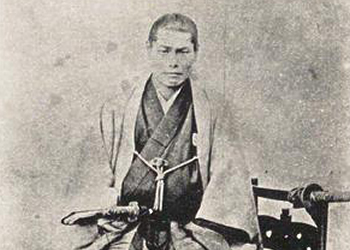
Kondo Isami
When Kondo Isami and 24 others formed the Shinsengumi in Kyoto, the person who donated his private residence was Yagi Gennojo, a local samurai from Mibu, and the “Yagi Residence” was used as their headquarters (a station where police or soldiers are stationed).
The Yagi residence still exists in Mibu, and today, descendants of the Yagi family run a Japanese confectionery shop called Turuya Kakujuan at the foot of Mibu Temple.
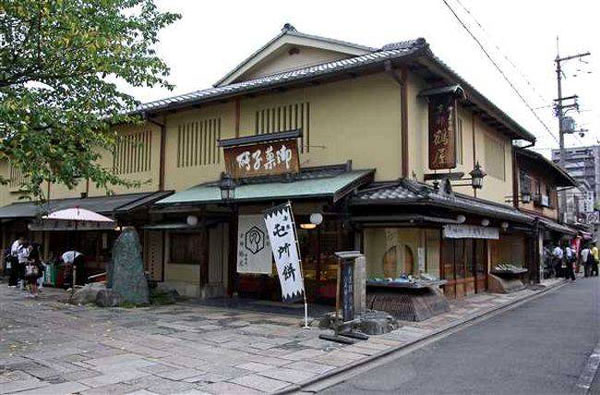
The exterior of Turuya Kakujuan
At Turuya Kakujuan, you can take a guided tour of the house for a weekday fee of 1,100 yen.
I have never visited the site myself, but I’ve heard that you can see the sword marks and bloodstains left on the pillars inside the house from when Kamo Serizawa, a high-ranking member of the Shinsengumi, was assassinated.
After touring the premises, you can enjoy the shop’s traditional Japanese sweets, Tonsho Mochi, and matcha tea. However, tours are not available during the Setubun period.
After visiting Mibu Temple for the Setubun festival, my friend and I took a break here.
Every year to celebrate Setubun, this shop offers its famous confection, “Mibu no Sato” (a type of yokan), and matcha tea (for 800 yen).
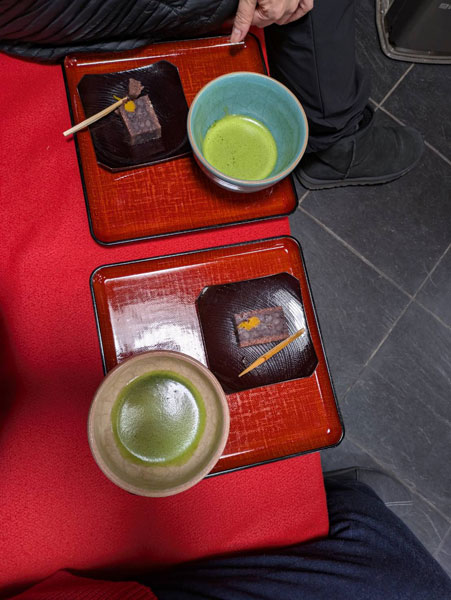
The photo of yokan and matcha tea
The yokan “Mibu no Sato,” which I enjoyed with a cup of matcha tea, was absolutely delicious, with the murasame bean paste crumbling delightfully in my mouth.
Bonus – Enjoy unlimited free amazake (sweet rice wine) to warm your heart.
This is probably only known to locals, but if you go from the Yagi residence, across Shijo Street and a little further up (north) along Bojo Street, you’ll find a discount liquor store called “Alpha” that gives away free amazake (sweet rice wine) every year on Setubun (the day before the beginning of spring).
Of course, my food-loving friend and I made our way there as well.
In front of the shop, a staff member, who appeared to be a part-timer, was busily calling out to passersby, “Would you like some delicious amazake (sweet rice wine)?” in front of a large pot that was boiling vigorously.
This area, somewhat far from Mibu Temple, is rarely visited even by locals, so there wasn’t a single person stopped to enjoy the liquor.
However, I and my friend were an exception.
They rushed over to the steaming pot and immediately said, “Please, let’s have some!” and enjoyed the liquor.
The amazake (sweet rice drink) with plenty of ginger has a wonderful aroma and warms you up nicely.
Freshly made amazake is available for free and you can drink as much as you like.
What a delightful treat!
If you have any opportunity to visit Mibu Temple’s Setubun Festival, be sure to take advantage of the delicious amazake (sweet rice wine) they offer.
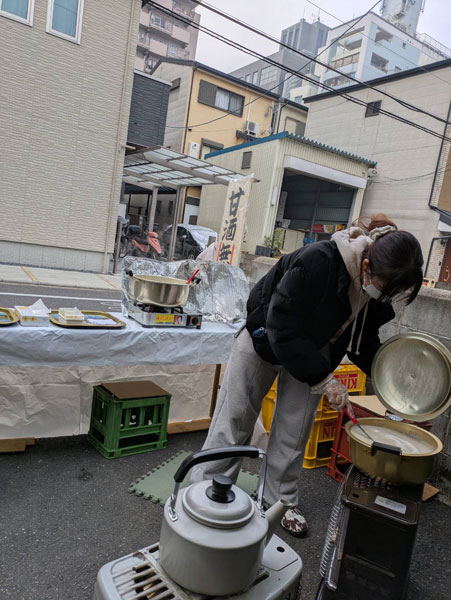
Female shop assistant guarding the amazake
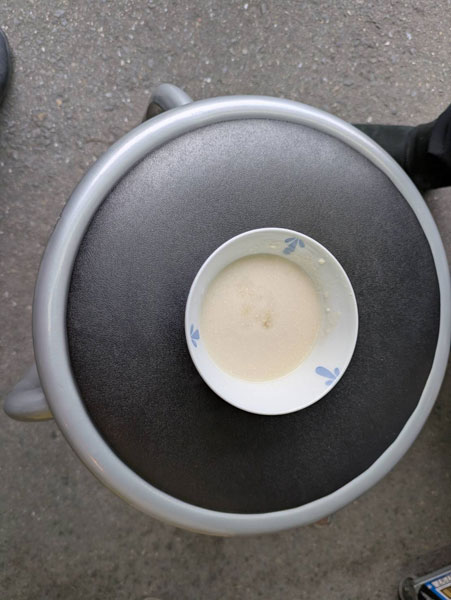
Photo of a teacup containing amazake (sweet rice wine)

Author

Tsubakuro
I was born and raised in Kyoto and am a native Kyotoite.
When I was young, I longed to visit Tokyo and Osaka, which are more bustling than Kyoto, but as I have gotten older, I have come to appreciate Kyoto a little more.
In this site, I will introduce you to some of the best places to explore Kyoto's food that you might otherwise miss at first glance.