Kyoto People and Hojicha Tea
Posted date:2025-10-24Author:Tsubakuro
Transrator:Ponta
Category:Kyoto Gourmet , Talk about Kyoto
広告
adsense4
To begin with
It was an event some years ago.
Once, a small gathering was held at the home of an acquaintance who kindly lent us their place.
At that gathering, the hostess of the home where the venue was provided served tea to the attendees.
All people gathered thanked her and were drinking the served tea, but suddenly, a man’s voice echoed throughout the room.
“Ah, well. No matter what anyone says, bancha tea is still the best, I tell you. You can drink it without worrying about anything.”
Then, without missing a beat, the venue provider’s wife retorted.
“I’m sorry to contradict you, but this is not bancha tea. Houjicha, you see. We don’t drink bancha tea, you know.”
She was calm, yet her tone was blunt, cutting off the other person’s words without hesitation.
Hearing their exchange, the group fell silent.
They must have felt terribly embarrassed.
The woman who started it all chuckled. “Heh heh heh heh,” and then vanished from the scene.
After that person left, the remaining people began to criticize her in unison, and the gathering became quite lively.
“Not knowing the difference between bancha and hojicha is just plain ignorant.”
“Drinking bancha? You think that’s something to brag about? It’s bancha, yes bancha.”
“Is she really Kyoto people?”
This story may have gotten a bit long, but as you can see, Kyoto people have a strong attachment to hojicha.
And no wonder – hojicha is consumed far more in Kyoto than sencha, green tea, or matcha.
Now, let’s explore the charm of hojicha, a tea deeply loved by the people of Kyoto.
Types of Tea: Hojicha, Bancha, Genmaicha
1: Hojicha
This tea is made by roasting sencha, kiku-cha, bancha, and other varieties over high heat until they turn a fox-brown color, bringing out their rich, toasty aroma.
Additionally, this includes tea made by roasting a mixture of large leaves and stems separated during the finishing process of sencha and bancha.
Heat the tea leaves in the roaster at approximately 200 ℃ until the roasted aroma emerges, then cool them immediately.
Roasting (hojiru) causes the caffeine to sublimate, resulting in a refreshingly light mouthfeel. This tea is perfect for sipping freely throughout the meal or before bedtime.
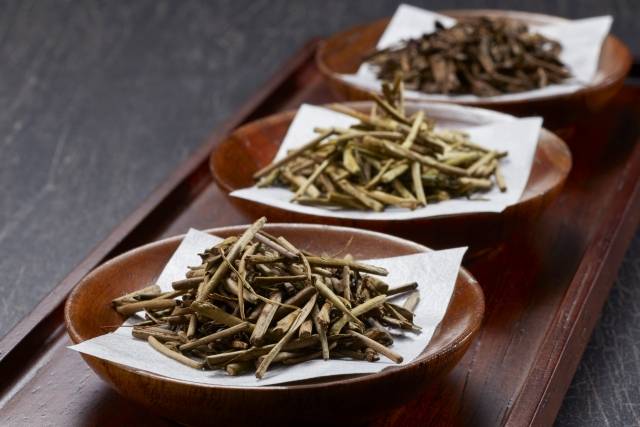
Hojicha tea leaves
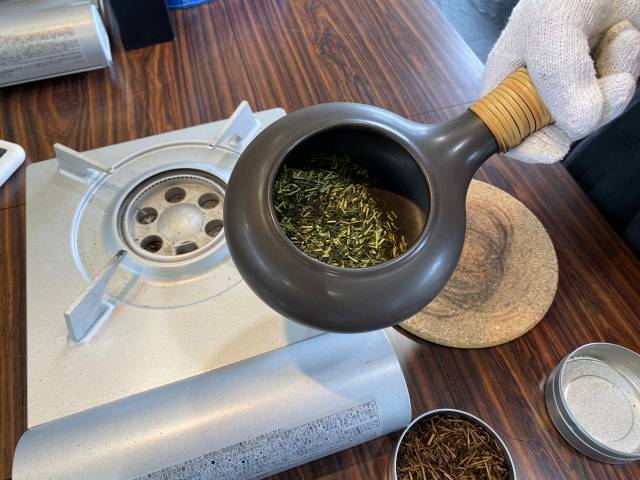
Photo for roasting tea leaves
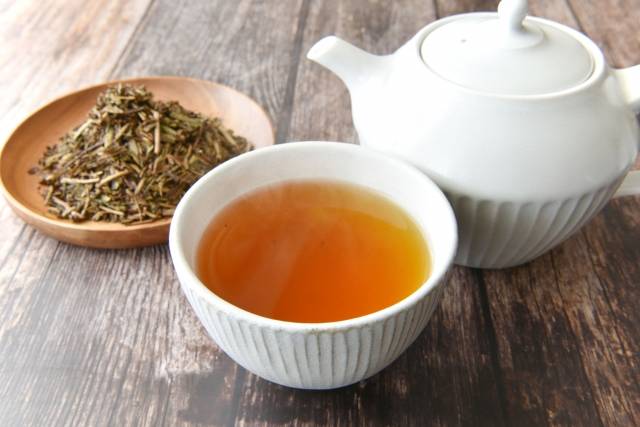
Teacup, Hojicha tea leaves, and teapot
2: Bancha
Bancha is said to derive from “ban’gaicha” (extra tea) and is broadly classified into four types.
Bancha has various meanings depending on the tea leaf picking season, quality, and region.
1: Hand-picked first flush tea, or tea made from late-picked buds after the young shoots have been harvested, with excellent quality. (Technically referred to as “Ichibancha”)
2: This refers to tea leaves that were not picked for the third flush but left untouched until autumn, when the branches and leaves had grown larger, and then harvested. It constitutes the overwhelming majority of the harvest. (Technically known as “Autumn-Winter Bancha”)
3: Products manufactured by extracting large, flat leaves without cutting them during the finishing process. (Technically referred to as “heads.”)
4: Products made using special methods for local consumption. (Examples include “Kyoto Bancha” and “Awa Bancha”.)
All of which refers to teas that fall outside the mainstream of Japanese tea due to factors such as harvest period, quality, or region.
One theory suggests the name “bancha” evolved from “bancha” (late-picked tea), while another theory claims it originated from the cheap tea soldiers drank while on standby duty at guard posts.
3: Genmaicha
This tea is made by roasting rice that has been soaked in water and steamed, then blending it with sencha or bancha in equal proportions.
You can enjoy the savory aroma of roasted rice and the refreshing taste of sencha and bancha.
The inclusion of rice reduces the amount of sencha and bancha used, resulting in lower caffeine levels. This makes it a tea that can be safely recommended for children and the elderly.
What makes Hojicha appealing?
The proprietor of Yamamotoen Tea Shop, a long-established tea merchant specializing in Uji tea, speaks about the relationship between Kyoto residents and hojicha as follows.
“Hojicha is a tea that Kyoto people overwhelmingly prefer. In the general public’s mind, when you say “hojicha,” it somehow seems like it’s a step down compared to sencha and green tea. But you know, some hojicha blends are actually made by collecting the stems of incredibly high-grade tea varieties. For example, in Kyoto, they call tea made by gathering only the stem parts of gyokuro or sencha “karigane”, right? Actually, stem tea has a sweetness and mellow flavor that leaves just can’t produce. People in Kyoto really love buying hojicha made from roasting karigane.”
“At our shop too, when we roast the tea, the aroma draws our regulars running in, but the stem-roasted tea sells out the fastest. In other words, hojicha made from karigane. The tea leaves used for stem hojicha are authentic gyokuro or sencha, and they retain the unique sweetness and mellow flavor characteristic of stem tea. Moreover, because it’s roasted, its fragrant aroma and gentle mouthfeel stand out. Since the caffeine’s been completely removed, even children and the elderly can drink it safely. You can drink it freely, and it uses high-quality tea leaves. What’s more, hojicha is cheap. Kyoto people love hojicha because they truly understand the appeal of this stem-roasted tea.”
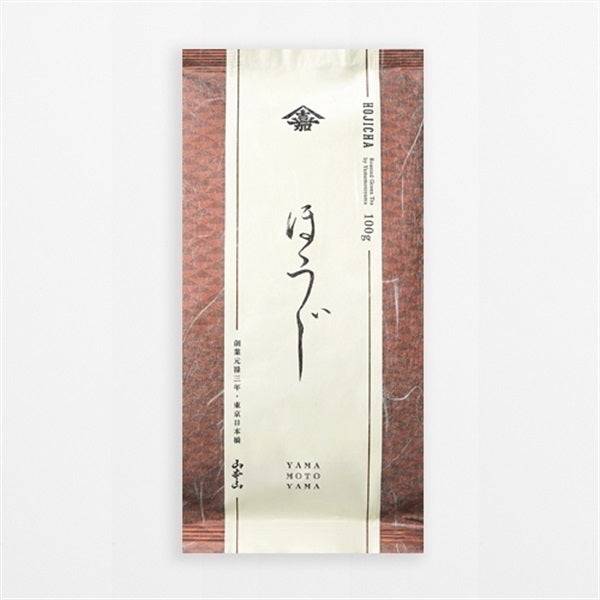
Karigane Hojicha Package Photo
As you can see from this, the wife of one of my acquaintances was a true Kyoto native.
In other words, she doesn’t want her family who drinks hojicha, lumped together with those who drink bancha.
Between hojicha and bancha, here lie the differences.
Hojicha and bancha.
Both are enjoyed daily, but as mentioned earlier, Kyoto people – who are particular about tea – definitely favor hojicha.
In fact, the production methods, taste, and aroma of hojicha and bancha are completely different.
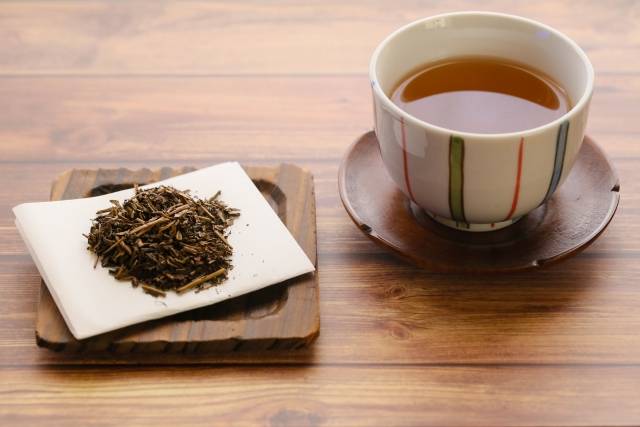
Photo of brewing Hojicha tea
Difference 1: The ingredients and production methods
As introduced at the beginning, hojicha is a tea made by roasting tea leaves at high temperatures. It is manufactured by heating at a high temperature of around 200 ℃ for 5 to 10 minutes. Tea leaves used include sencha, bancha, and kuki-cha. This roasting process turns the tea leaves brown and imparts a distinctive savory aroma.
In contrast, bancha is made by rolling, steaming, and drying the third flush tea leaves that grow after the first and second flushes, leaves picked around autumn. Bancha does not undergo a roasting process.
Difference 2: The aroma
The greatest appeal of hojicha is undoubtedly its rich, savory aroma. The compound responsible for the aroma is called “pyrazine,” an aromatic compound produced when amino acids and sugar contained in tea leaves are heated. Recent studies have found that “pyrazine” has relaxing effects. In addition, it has the effect of broadening blood vessels and promoting blood circulation, drawing attention for its potential to improve cold sensitivity.
Banch tea is not roasted, so it lacks the strong aroma of hojicha, but you can enjoy the gentle, mild fragrance inherent to the tea leaves themselves.
Difference 3: Taste
Hojicha offers a rich aroma along with a mellow sweetness and depth of flavor. This too is due to the roasting process.
The astringent components such as catechins originally present in tea leaves transform into components that do not dissolve in water when subjected to high-temperature heating.
Furthermore, the sugar in the tea leaves caramelizes during roasting, enhancing the sweetness even more.
In contrast, bancha tea is characterized by its mild, refreshing taste due to its low levels of caffeine and tannins.
Additionally, it remains suitable for preservation because it is less prone to developing bitterness even long time has passed by after brewing.
And it’s also a convenient tea that anyone can easily brew.
How did you like it? As you can see, there are differences in the production methods, aroma, and taste between hojicha and bancha.
Each has its own characteristics, so please select an appropriate tea depending on the scenes or purposes.
For example, when you want to relax or go to bed, please drink hojicha.
For meals or when you want to refresh your mood, try hojicha rich in pyrazine.
Introduction of Popular Hojicha Recipe Variations
Hojicha, which pairs well with any food while also aiding in brain relaxation and improving cold sensitivity, has recently gained significant attention in today’s health-conscious society. In Kyoto, where hojicha has long been popular, hojicha specialty shops have been opening one after another in recent years.
At such shops, various hojicha-based recipes are developed and offered, including hojicha cakes, hojicha parfaits, and even hojicha lattes.
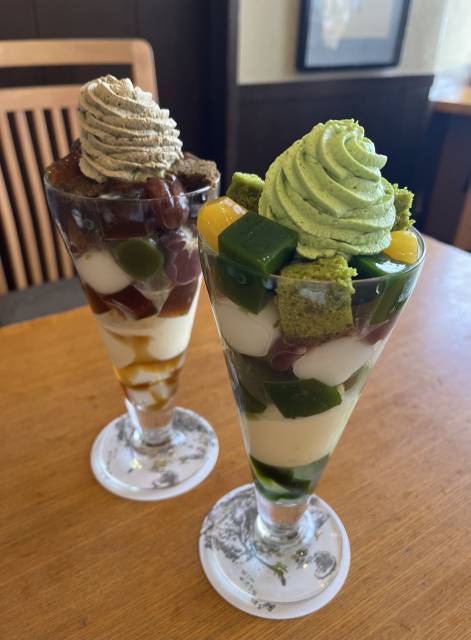
Hojicha Parfaits
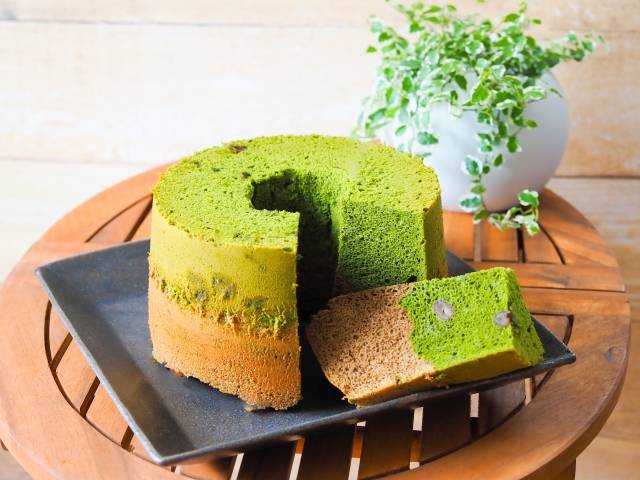
Hojicha Chiffon Cake
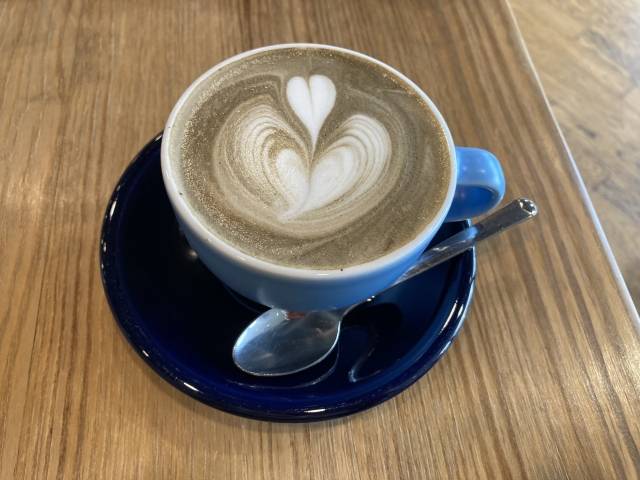
Hojicha Lattes
Perhaps it’s fair to say that the appeal of hojicha tea has now expanded beyond simply complementing Japanese sweets and cuisine.
The following are well-known specialty shops for hojicha tea.
1: HOHO HOJICHA, Roasted Tea Specialty Shop Kyoto Station Branch (Simogyo Ward)
2: UJI MATCHA GOENCHA, Kyoto Gyokuro Goencha Takoyakushi Branch (Nakagyo Ward)
3: Ippodo Tea Shop, Kyoto Main Store (Nakagyo Ward)
4: Fukujuen, Kyoto Main Store (Shimogyo Ward)
5: Yamamotoen Tea Shop (Kita Ward)

Author

Tsubakuro
I was born and raised in Kyoto and am a native Kyotoite.
When I was young, I longed to visit Tokyo and Osaka, which are more bustling than Kyoto, but as I have gotten older, I have come to appreciate Kyoto a little more.
In this site, I will introduce you to some of the best places to explore Kyoto's food that you might otherwise miss at first glance.